
What does lived Heathenry really look like?
Sincerity and consistency in the Folk-Faith need not be gaudy nor mass-marketed, in fact ideally it shouldn't be either

This piece is in response to, and expanding upon my good friend Awen's recent work calling out “Pagan LARP” as an issue serious adherents of the Folkway have to reckon with. It’s an excellent piece and I strongly recommend reading hers first, so you can follow the flow of this dialogue from its start.
I have previously addressed what I call “pubmoot pagans” as well in an article of my own, but rather than drilling down more on the fake and gay of the scene, I believe the most constructive direction to take this discourse is to begin from the question left behind following critique… what does Heathenry look like without the Renaissance Faire/D&D/Vikings™ trappings?
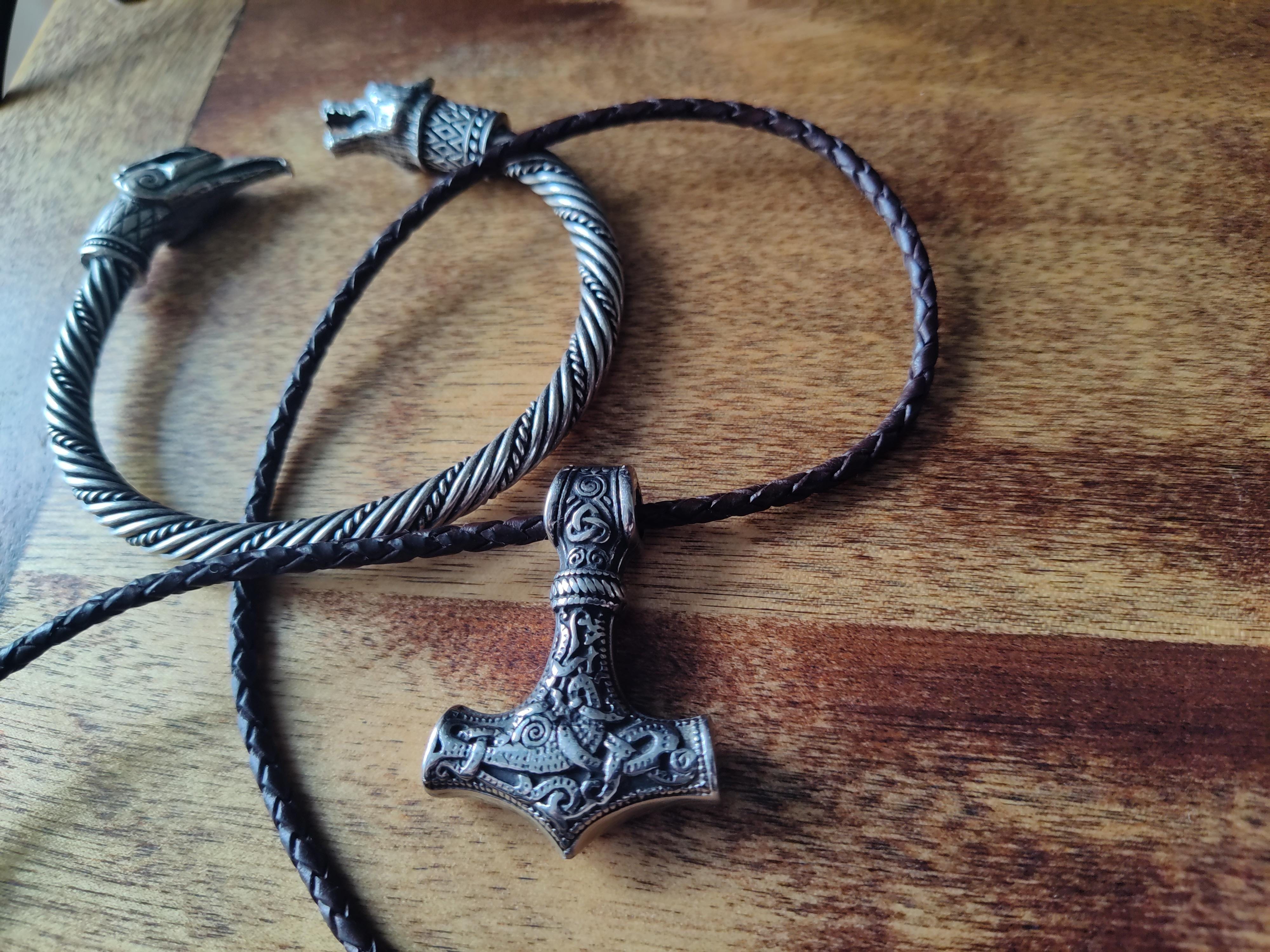
An easy distinguishing feature of Tru folk from LARPers is, the honor-based morality and ideals of the Folkway. While the general moral imagination in the West is still predicated upon sin or guilt, and the alleviation of it either through absolution or therapy, the heathen heart sees our spirits, strengths, and shortcomings as our own, and tied to the honor and reputation of those who associate with us. This is on the one hand liberating, as it carries immense freedom and agency for the individual, but it also demands a heavy responsibility as there’s no cosmic “backsies,” what’s put out is out and no one but us and ours are responsible for it.
Lived Heathenry is also deeply local, to the Kindred, to the region, and to the very spirits of the land one inhabits. Whereas most modern religions are universalizing and globalizing, Heathenry has a significant substrate of animism, in which one’s ancestors, the forests, rivers and mountains make up the pantheon which is most regularly engaged with. The Gods are present and observed properly, but in truth it is the ancestors and vaettir who are the most frequent, and closest, entities to the daily practice. Observances such as donning Thor’s hammer, or kindling a hearth or shrine candle are seamlessly integrated and pragmatic elements of one’s day which weave in the understanding of the world as overflowing with spiritual potency.
This proximity is not just for the supernatural either, kinship and even deep friendship bonds are an explicit good in the Troth, and the giving of gifts, of travelling to visit kinsmen and being there to support them is at the core of the practicing heathen’s responsibility. In contrast to the “telescopic empathy” of evangelizing missions or going door-to-door fishing for converts, it is the physical, mental, and spiritual wellness of one’s own extended clan which represents the highest need.
The spiritual calendar of the Heathen is guided by the turning of the seasons, in which offerings are made to the Gods to maintain the Frithshelga, or “sacred bond” between the clan and Holy Powers. These are not offerings to stay the wrath of a jealous divine, or a compelled servitude, but the maintaining of a reciprocal partnership with the greater forces that created and safeguard order in the chaos of the cosmos. The gods bless and guide us, and in return they have a seat at our table, and a hero’s portion of our bounty. As previous great authors of our folkway have said, our relationship to the Holy Powers is not that of master and servant, but that of greater and lesser nobility. We are descended from the Gods, and hold them in the esteem of royalty, while conducting ourselves as faithful and honored descendents of that house.
In gathering as Kindreds at the high points of the year, in the reciting of sacred lore, and the telling of deeds accomplished, and taking oaths to the Gods, to one another, and pressing one another to lift the bar yet higher, we conduct ourselves in a manner our heroic ancestors would recognize and approve of, and in so doing, embody the Folkway.
You may have noticed at this point I’ve not mentioned any materials yet. If there’s one criticism of contemporary pagans I’ve heard from both detractors and even some tough-love types within our sphere, it’s the all-too frequent obsession with “pagan stuff.” Statues, malas, card sets, rune sets, incense, wall art, floor art, outdoor art, historical clothing, pendants, horns, mugs, shirts, hats, lots of weapons. While this is hardly unique to Heathendom, there’s truth to it.
A good chunk of the reason for this is simply vulgar consumerism to be sure, but I would also say many Tru folk are artists in their own right, and with gift-giving being such a significant element of the Folkway, it makes sense for adherents to garner items of that type. Perhaps the better advice is not to abstain from “pagan stuff,” but to make a point to gift treasures out at least as much as one takes in. Othinn is not a god of denial, but he does advise moderation.
Some materials are necessary, I would say at minimum some sort of pendant to wear as a daily devotional, idols of the Gods one observes, a rune set for becoming familiar with the Futhark, casting and so on, and a bowl and horn or chalice for performing libations. A sacred space should have a flame (usually a candle or a kind of incense), a bell, a ritual hammer and an oath ring. Essentially, what is needed to maintain a sacred space, and ritual components.
These taken together, the portrait of a heathen practitioner is certainly less boisterous than LARPers of both the hammer and cross-wearing varieties would have one believe. A faithful, local nature-lover who tells stories, gives gifts frequently, follows the seasons, hosts family and friends and maintains an altar to the Gods and spirits. In short, a life which makes for terrible “content.” Maybe that should be the goal all along.
Go with the Gods,
Bran
The thing people who leave abrahamism do not understand is that paganism is not a response to or the antithesis of any abrahamic practice. It does not need to be a costume change between the two, you should be aiming to just let your life unfold as it should naturally. People talking about direct communication to deities (being “godphones or godradios or any of that silly shit) people dressing up like they are living in the Danish golden age, even people requiring a mjolnir or any other pendant in lieu of a cross. None of that is paganism. Sitting and meditating under a tree and listening to the deepest hum of reality around you; this is where the practice begins.
Plain and simple, Heathens need to be better stewards of our faith.